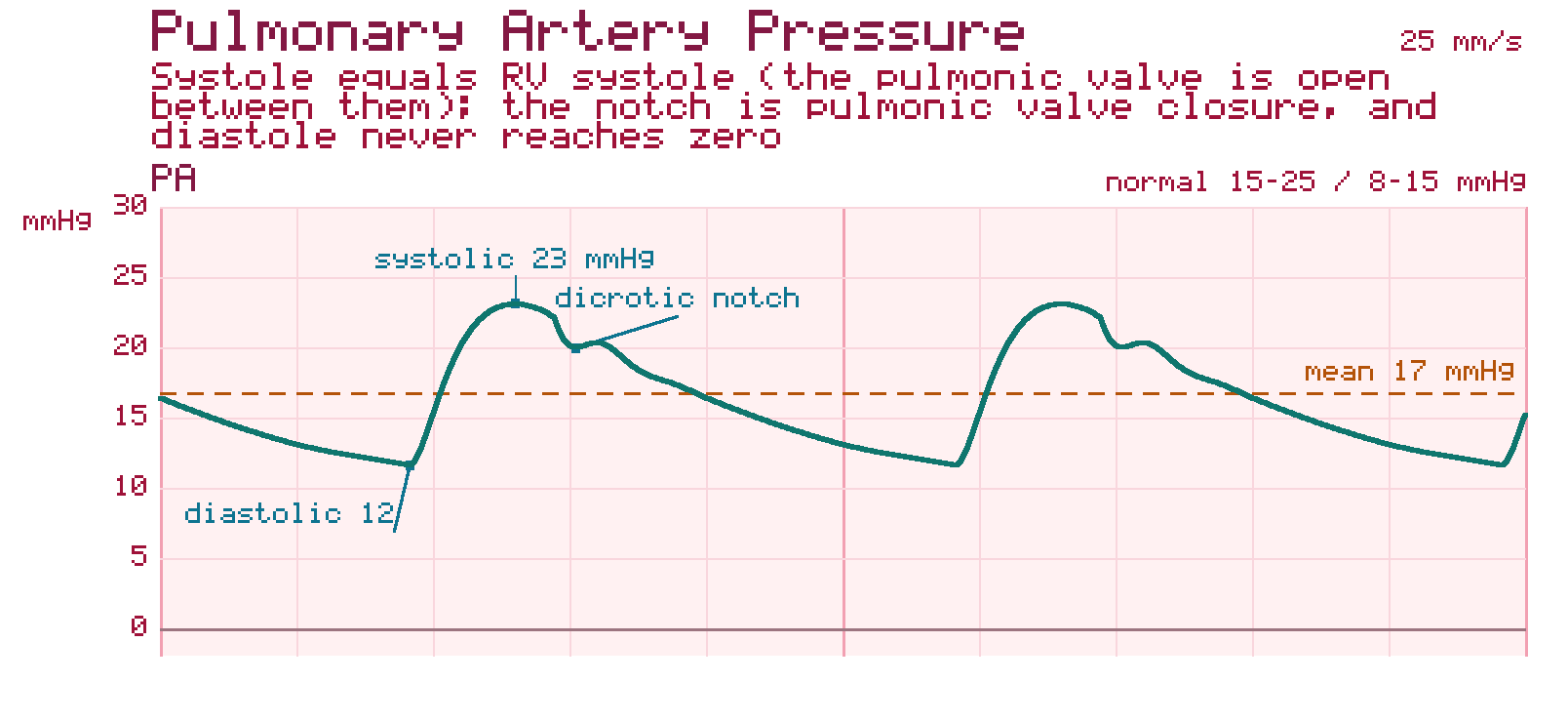
Upon entering the pulmonary trunk, the systolic pressure remains equivalent to RV systole (15 to 25 mmHg). However, the sudden closure of the pulmonic valve generates a characteristic dicrotic notch, preventing the diastolic pressure from dropping to zero (normal diastolic range 8 to 15 mmHg, mean PAP 10 to 20 mmHg).
Related RCIS terms
Study RCIS terms in context
Cardiac Codex turns definitions like this into a full study system: 179 lessons, 2,198 practice questions with explanations, four blueprint-matched full-length mock exams, live and timed, and Cardiac Coach — an AI tutor grounded in this exact glossary you can ask from any lesson.
Start free Back to the glossary →
Cardiac Codex is an independent study tool published by MdoubleA LLC, not affiliated with or endorsed by CCI or any certifying body. This glossary entry is exam-preparation information, not medical advice or a substitute for clinical judgment. Always verify current clinical practice against primary sources and institutional protocol.