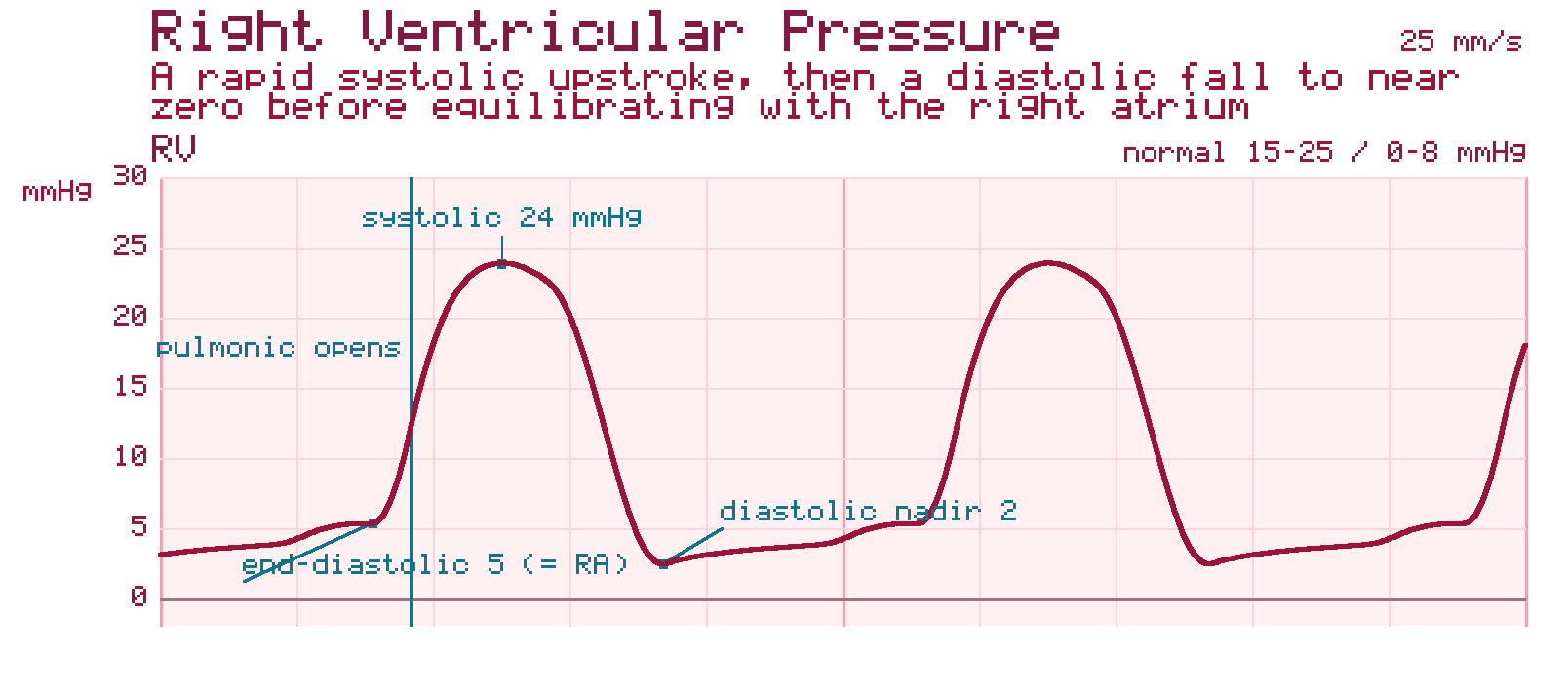
As the catheter crosses the tricuspid valve, systolic pressures rise abruptly (normally 15 to 25 mmHg). During diastole, the pressure falls rapidly to near zero before equilibrating with the right atrium (0 to 8 mmHg).
Related RCIS terms
Study RCIS terms in context
Cardiac Codex turns definitions like this into a full study system: 179 lessons, 2,198 practice questions with explanations, four blueprint-matched full-length mock exams, live and timed, and Cardiac Coach — an AI tutor grounded in this exact glossary you can ask from any lesson.
Start free Back to the glossary →
Cardiac Codex is an independent study tool published by MdoubleA LLC, not affiliated with or endorsed by CCI or any certifying body. This glossary entry is exam-preparation information, not medical advice or a substitute for clinical judgment. Always verify current clinical practice against primary sources and institutional protocol.